
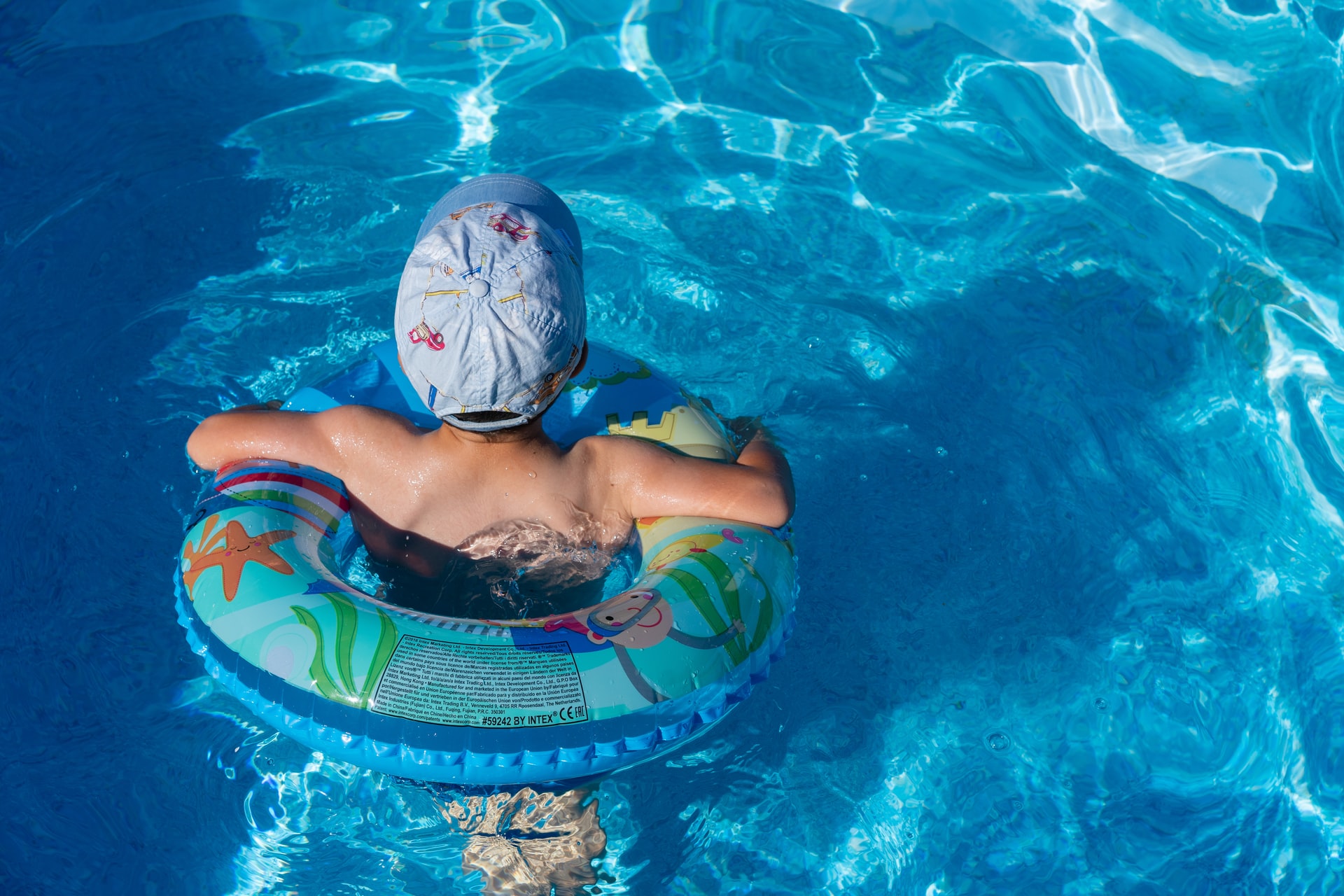
What Is A Optional Time When You Learn How To Swim?
Want to learn to swim but unsure of the time commitment? Here, we deconstruct many scenarios to help you achieve the most accurate estimate.
How long does it take to learn to swim? Is one of the most often asked questions we receive as instructors? – We always respond with a succinct—but quite unsatisfying—it depends.
Because everyone who wants to learn to swim does so at a different pace. For instance, if you’re athletic and have a few hours to spare each week for practice, you’ll probably be swimming laps in no time.
However, your progress will undoubtedly be slower if you can only manage a few sessions each month and are not at all at ease in the water.
But you didn’t come here for that response. You need reliable estimates. Don’t worry, though; in this post, we’ll provide recommendations and time estimations to better understand how long it will take you to develop your swimming confidence.
Let’s get started if you think that sounds good.
What is the oldest age at which you may learn to swim?
When it comes to Swimming classes for kids, many people believe they’ve reached their limit. They hold the opinion that swimming is a skill that must be learned at a young age or you’ll never be able to accomplish it.
Nothing could be further from the truth in actuality. There is no upper age limit for beginning swimming instruction and reaping its rewards. It doesn’t matter if you’re 3 or 93; neither is relevant.
Swimming is perhaps the best activity for us as we become older. Our bodies remain strong, flexible, and lean because to the low-impact nature and additional resistance provided by the water.
The interesting thing is that adults typically retain information faster than children because they have more tolerance and are better at accepting criticism.
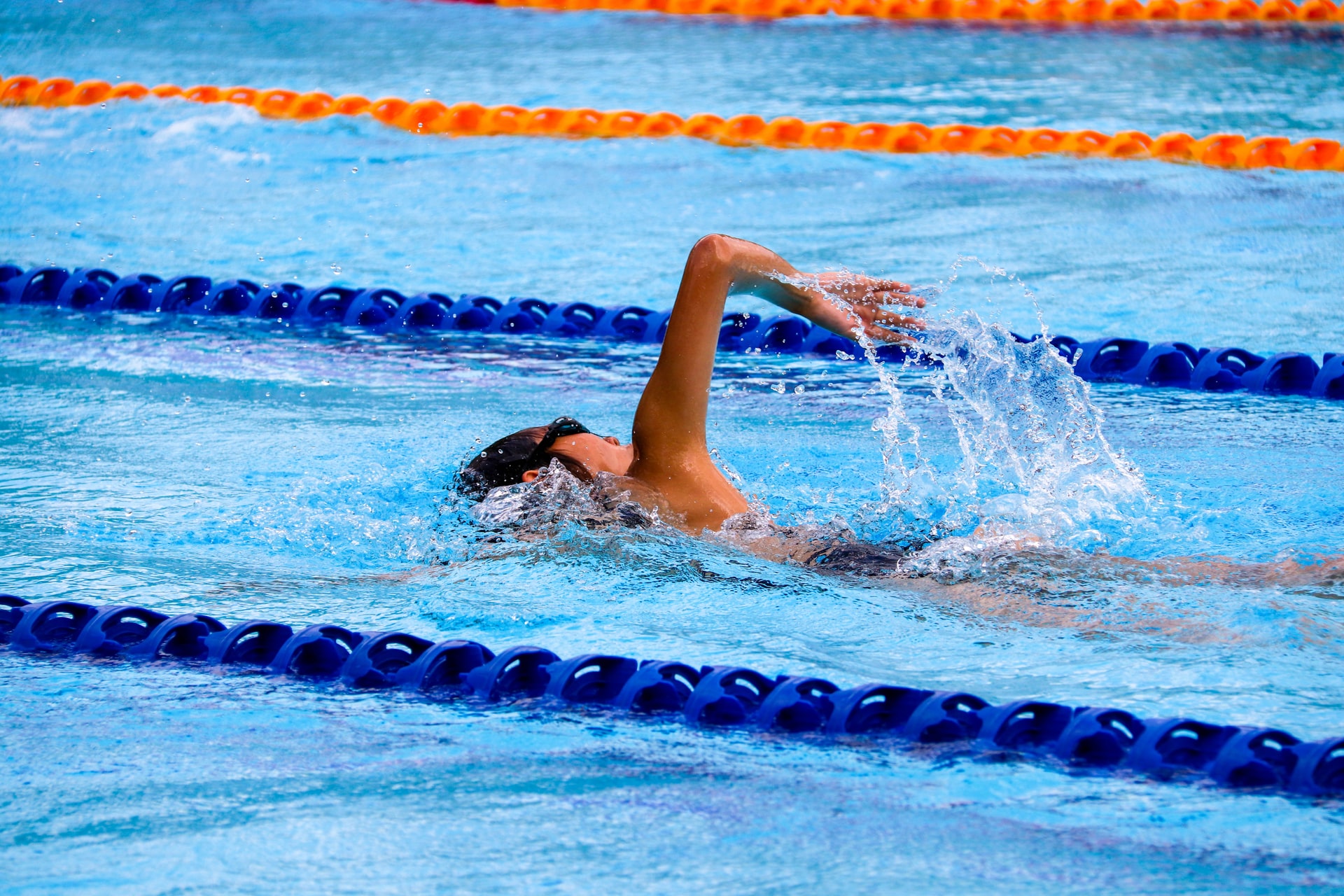 What Steps Are Involved In Learning To Swim?
You don’t immediately go from being unable to float to swimming laps for time when learning to swim. It is more like a spectrum with three main stages. As follows:
Developing Water Comfort: Not everyone feels at ease in the water. It’s normal to feel anxious about entering the pool for the first several weeks. A competent coach will be able to ease you through this phase and give you the assurance you need to proceed to the next.
Laying the Foundations: Here, you’ll discover the fundamental techniques that apply to all strokes. You’ll learn how to streamline, kick on your front and back, float, manage your body in the water, and much more.
The last stage of learning to swim is called dialing in technique. You may learn complete swimming strokes like front crawl and rear crawl here. Additionally, you’ll pick up more sophisticated abilities like dives and tumble-turns.
The length of time you’ll spend at various levels varies substantially depending on several variables; let’s look at those present.
How Long It Takes to Learn to Swim: Factors
There are five things that can either speed up or slow down the learning process for swimmers, and each swimmer’s path will be different.
1. Aversion to water
For many newcomers, fear of the water is a big fear. It can take time to get accustomed to the water, making learning more difficult.
2. Reliability
It requires consistency to learn new things. The same applies to swimming. Consistently going to the pool and taking lessons will greatly speed up learning because abilities build upon one another.
3. Periodicity
You’ll improve as you get more knowledge. Naturally, if you can attend two lessons each week, you’ll advance far more quickly than someone who just attends one.
4. Motor Capacity
You’ll probably take up abilities more quickly if you’re athletic than if you’re not. Adults and older children often learn more quickly than younger children because their motor abilities are more advanced.
5. Instructional effectiveness
A great swimming instructor can hasten learning through their techniques of instruction, experience, and knowledge.
What Is the Time Frame for Learning to Swim?
Learning to swim requires solid training, time, effort, patience, and a ton of practice, just like learning the piano or French.
It’s challenging to estimate how long it will take you to learn to swim, as was already indicated. But based on our years of experience, here are some best estimates:
How Long Does It Take for Children to Learn to Swim?
You probably can’t wait for your kid to start swimming lessons if you’re a parent. It’s not only a good thing to do for your health but also a vital safety skill that might save their lives. Here are some common recommendations:
Infants (12 months to 18 months) who take 30 minute private lessons per week can often swim with confidence in around one and a half years. However, due of their underdeveloped motor abilities, formal strokes are typically beyond their grasp.
Within a year of receiving private instruction for 30 minutes a week, young children between the ages of 2-3 can often swim confidently.
Children aged 3 and older who take private lessons for 30 minutes each week may often learn to swim in 6 months, or 20 to 30 hours.
These estimations are based on the assumption that towards the conclusion of the allotted time, your youngster could swim 25 meters without pausing. It can take kids up to 2-3 years of consistent instruction to develop their swimming skills to the point where they can swim 100 meters without stopping.
It also goes without saying that group sessions will often take longer to complete than private lessons.
How Long Does It Take for Adults to Learn to Swim?
Learning to swim as an adult can be difficult, frightening, fantastic, and satisfying. Here is a timeline to guide you:
Adults who learn normally and don’t have any phobias of the water typically just need 20 to 25 hours of private instruction to acquire the fundamentals of swimming. That corresponds to roughly one 30-minute class every week for a whole year.
The process can take much longer if you’re very unfit, overweight, or reluctant to get in the water.
All adult learners are different. While for some people being in the water feels natural, it might be frightening for others. There is no set time limit, but with enough effort, practice, and optimistic attitude, any adult should be able to learn to swim.
How Much Time Does It Take to Master Swimming?
Understanding the fundamentals is one thing; being a strong swimmer is quite another. The good news is that once you master the fundamentals, your progress will begin to accelerate.
How Much Time Will It Take Me to Learn to Swim for a Triathlon?
Many folks desire to learn to swim or improve their swimming skills to compete in triathlons.
A sprint triathlon requires 750 meters of uninterrupted freestyle swimming, while an Olympic triathlon requires 1500 meters.
Once you have a firm grasp on front crawl, it can take anywhere between 12 months and 2 years of consistent training to be able to swim 750 meters. Once you can complete 750m in a full-length triathlon, you can likely complete 1500m in just another six months of training, 2-3 times per week.
How long does it take to become proficient in every stroke?
You’ll spend the most time learning your first stroke. This is so because many of the abilities needed to swim with one stroke also apply to the other strokes.
You can improve your body balance in the water and integrate your leg and arm actions for higher efficiency by learning how to swim front crawl, for instance.
Backcrawl typically follows the other strokes rather rapidly. The full breaststroke follows, and because it requires more technical skill than the butterfly does, it usually takes longer.
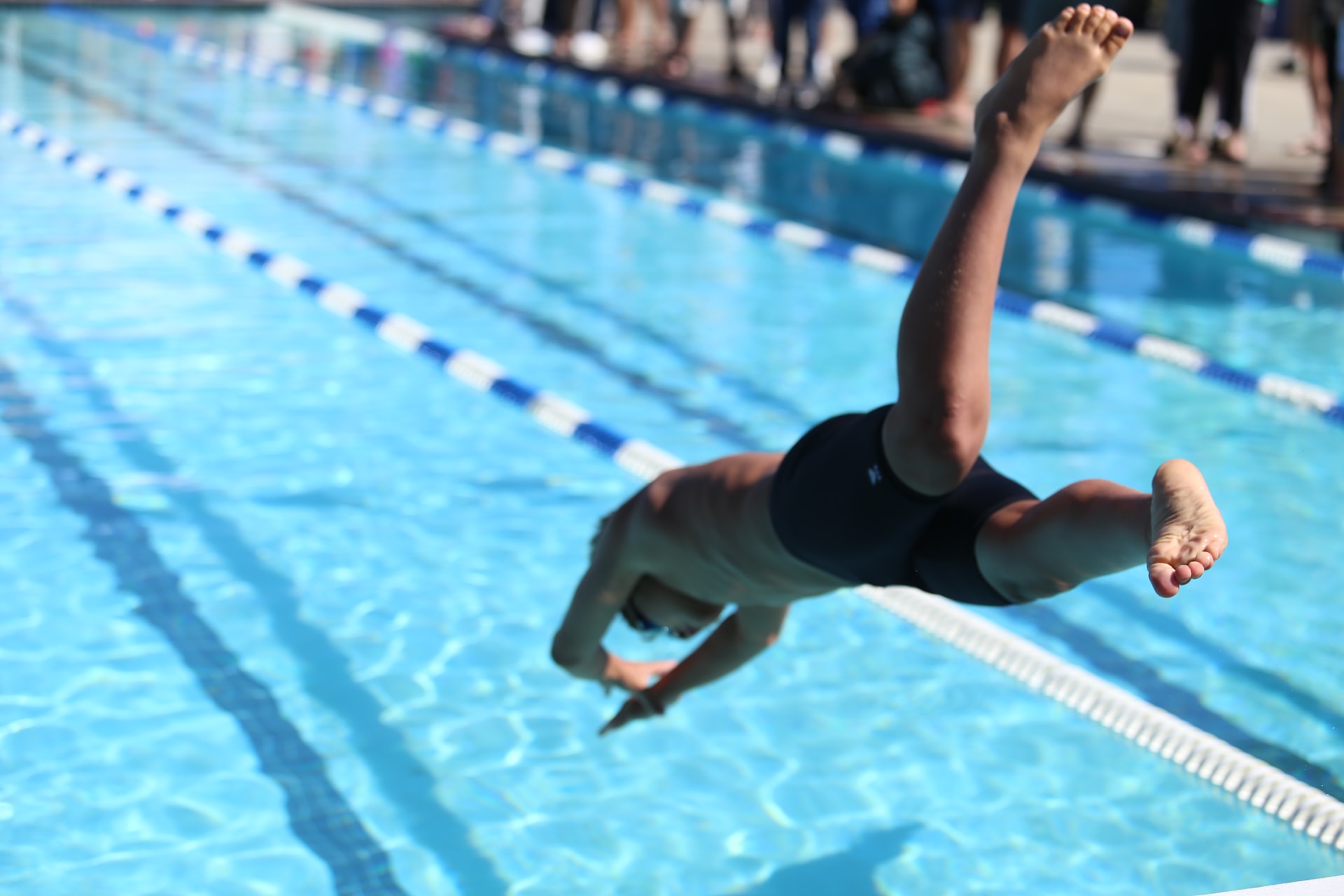 How to Quickly Learn to Swim
Now that you know roughly how long it takes to learn to swim, you may be asking, “Is there anything I can do to speed up the process?” – There is, indeed! Here are our top recommendations for accelerating performance.
Establish Goals
Setting clear, time-bound, measurable goals is a wonderful approach to ensure you stick with your swimming program. Therefore, use the phrase “By the 15th of July, I’ll be able to swim 25m front crawl without stopping” rather than “I want to learn how to swim soon.” This brings us nicely to our next point: a skilled instructor can assist you in setting reasonable goals and directing you toward reaching them.
2. Locate a Superb Teacher
Having an excellent teacher will accelerate your learning more than anything else. Having taught 1,000 pupils to swim, good instructors will have a plethora of experience, knowledge, and skills. Choosing an instructor specializing in the subject matter you’re after is essential. Choose an instructor who specializes in teaching adult learners, for instance, if you are an adult. You must look for the very finest instructor in your area.
3. Spend more time swimming
You’ll be able to swim more quickly the more time you can spend in the pool. Most individuals can squeeze in one class each week, but if you can increase that to two or three, you’ll achieve your goals much more quickly and gain the added benefit of burning more calories.
4. Pay attention to one skill at once.
It takes a lot of technical skill to swim. When you first start, it could seem like there are a billion things happening simultaneously. Therefore, concentrating on mastering only one ability will enable you to advance more quickly.
5. Purchase a Quality Set of Goggles
This one may sound a little stupid, but bear with me. You’d be shocked at how many novice swimmers purchase inexpensive goggles and then have to put up with leaky water and hurting eyes. Having uncomfortable eyes when learning to swim is difficult enough. Invest in a good set of goggles. The Speedo Biofuse Flexiseal Goggle makes a great first purchase.
A Conclusion
While it’s impossible to tell exactly how long it will take you to learn to swim, we can say with certainty that private swimming lessons will help you get there faster whether it takes you 2 weeks or 2 years.